|
Size: 3989
Comment:
|
Size: 3999
Comment:
|
| Deletions are marked like this. | Additions are marked like this. |
| Line 37: | Line 37: |
| Line 42: | Line 44: |
| Questions to Consider * What are the relationships between the listed independent variables and dependent variables? |
== Questions to Consider == * What are the relationships between the listed independent variables and dependent variables? |
X-rays from peeling tape
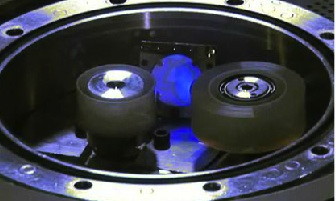

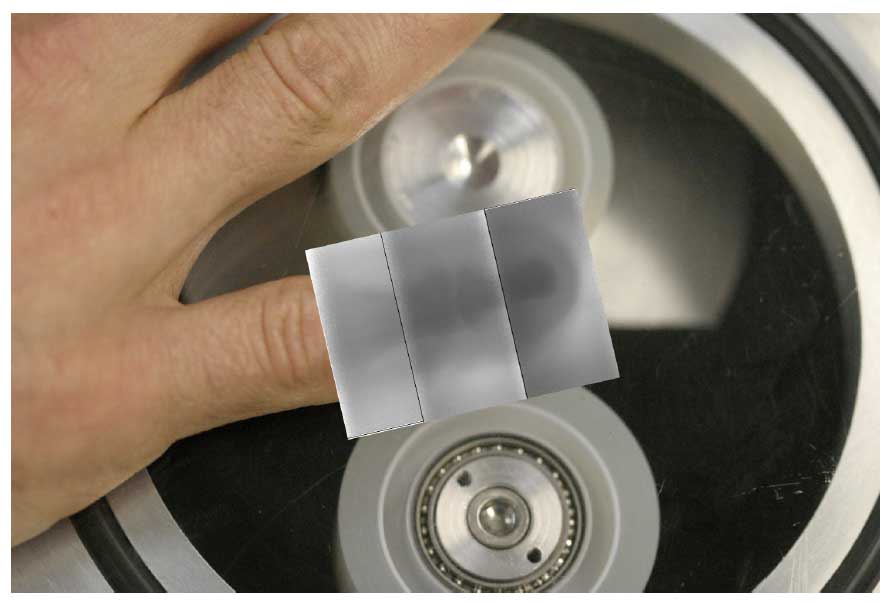
NOTE: This project requires attention to X-ray radiation hazards.
This project is an exploration of X-ray production from pulling scotch tape. You may not believe this, but hear me out. If you peel tape off a reel in a vacuum (~10^-3 torr) at a few cm per second rate, megahertz of 10-40 keV X-rays are produced, which are approximately dental X-ray quality! X-ray imaging is easy! Could this replace the expensive equipment used in medical radiographs? Possibly... but first we have to understand how it all works!
The original paper,"Correlation between nanosecond X-ray flashes and stick–slip friction in peeling tape," Carlos G. Camara1,2, Juan V. Escobar1,2, Jonathan R. Hird1 & Seth J. Putterman, Nature 455, 1089-1092 (23 October 2008) | doi:10.1038/nature07378; Received 30 December 2007; Accepted 27 August 2008, had an almost immediate reaction. The Nature video to accompany it contains a less detailed but informative introduction to the strange effect.
When two contacting surfaces rub together, they can produce visible light. This is called Triboluminescence, and, according to Camara et al., it is the process by which the X-rays are produced, with clear the implication that it is not, as previously thought, restricted to the visible light spectrum, but can extended several orders of magnitude beyond visible light.
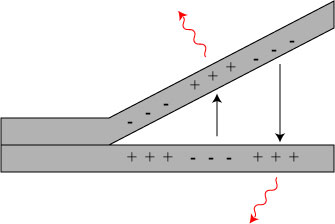
The basic idea is simple: the peeling of the tape causes a separation of charge and, in the reduced pressure of a vacuum, the electrostatic discharge accelerates electrons to energies that are capable of producing Bremsstrahlung X-rays when they strike the oppositely charged side of the tape. However, the exact details on exactly how such high energy photons are produced by mere tape turns out to be rather complicated.
Independent Variables to Consider:
- Peeling rate
- Adhesive type
- Surface off of which adhesive is peeled
- Unrolling the adhesive is the case in which the adhesive is peeled off of itself
- Pressure of medium in which the peeling takes place
- Strength and orientation of the electric field in which the peeling takes place
- Strength and orientation of the magnetic field in which the peeling takes place
Dependent Variables to Consider
- Produced photon energy range
- Produced maximum photon energy
- Photon count rate
Questions to Consider
- What are the relationships between the listed independent variables and dependent variables?
- Which independent variable contributes most to photon energy and count rate?
- Are photon energies and photon count rates directly related to the adhesivity of the adhesive, or the materials of which the adhesive consists?
- What combination of parameters yields the narrowest photon energy range? Highest maximum photon energy? Highest photon count rate?
Add your name here to participate:
- Duncan Carlsmith
- Sam Carman